Exhibitions
Captivating Worlds of Exquisite Narrative Beauty: Inside Umi-Mori’s Collection of Monogatari-e Masterpieces
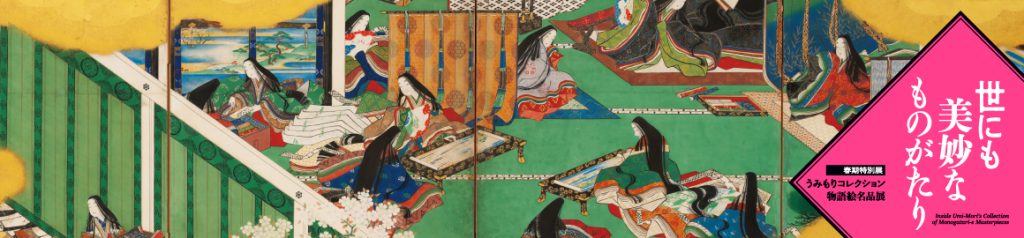
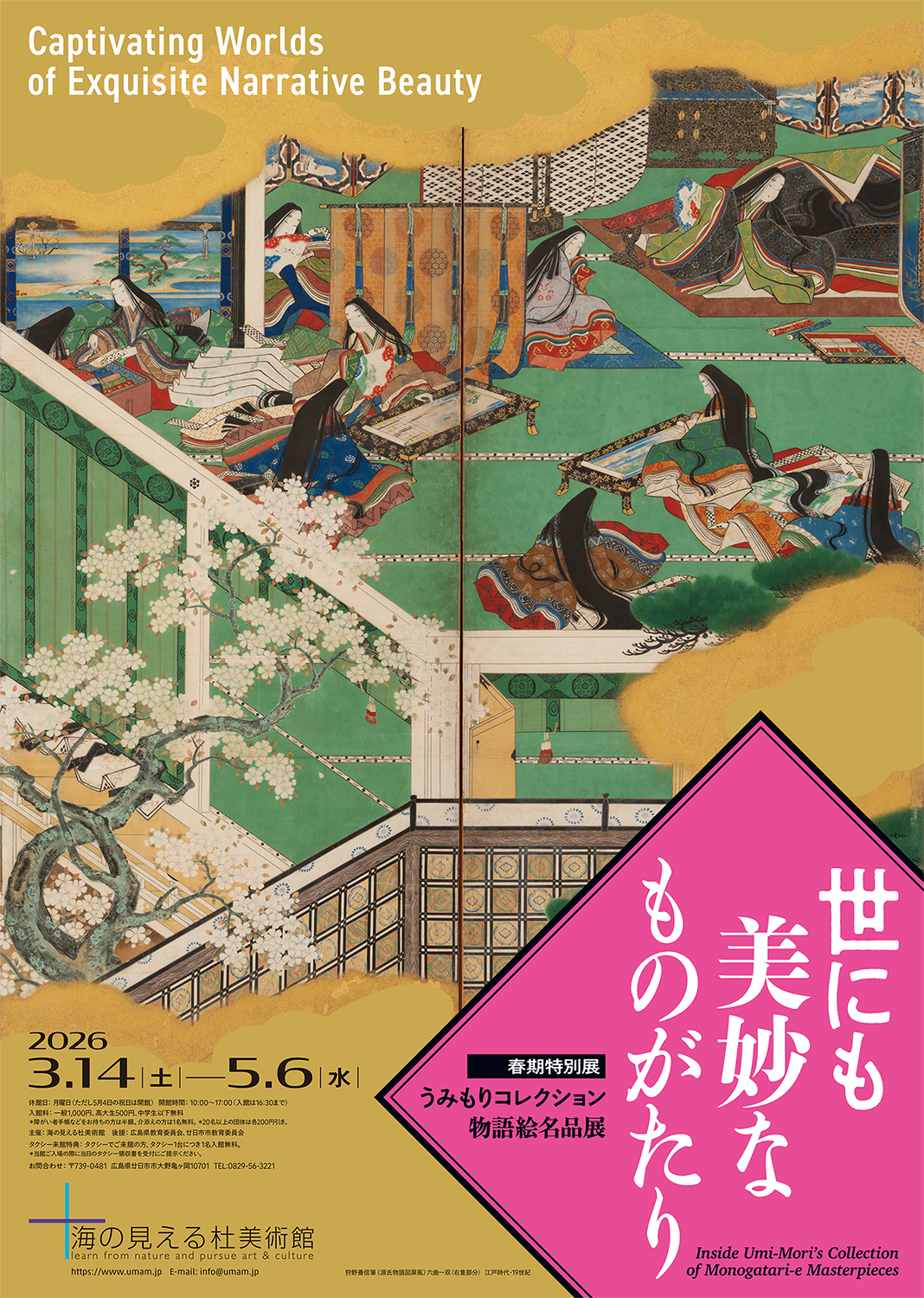
Welcome to the spring special exhibition “Captivating Worlds of Exquisite Narrative Beauty: Inside Umi-Mori’s Collection of Monogatari-e Masterpieces.”
Our museum’s broad collection includes Chinese woodblock prints, modern Japanese paintings, monogatari-e (such as narrative picture books and scrolls), ukiyo-e, calligraphy, and perfume flacons from antiquity to the modern era. This exhibition turns the spotlight on monogatari-e from the Muromachi period (1392–1573) to the Edo period (1603–1868) and it invites visitors to delve inside these spellbinding worlds of resplendence and refined simplicity.
Monogatari-e are works that represent tales and legends in pictorial form. Well-known examples include The Tale of Genji, The Tale of the Heike, and fairy tale books called otogi zoshi, with these beloved stories portrayed across a diverse range of formats, from handscrolls and booklets to accordion-style books and folding screens. During the 1980s, when our museum was called the Oshajo Bijutsu Homotsukan, our founder Umemoto Reikiyo began amassing lavish illustrated books and scrolls from the Edo period, works that did not garner much attention back then. In doing so, he built the foundations of our monogatari-e collection. The scope and scale of this collection has expanded ever since and it now presents a deep insight into the reception of early-modern monogatari-e. Highlights include Illustrated Texts for Kowaka Dances, a work demonstrating the popularity of Kowaka dance (a performing art enjoyed by the warrior class), and The Tale of Genji, an illustrated folding screen that formed part of a daimyo wedding trousseau. The collection also offers an in-depth and cross-sectional exploration into the history of Japanese painting, literature and performing arts.
The exhibition is divided into five sections that introduce selections from among our museum’s monogatari-e masterpieces. From renowned accounts of imperial love to stories of samurai derring-do and strange goings-on, these long-cherished tales have been carefully passed down to the present day. We hope you can enjoy them anew through these richly-expressive illustrated works.
General Information
Hours: 10:00-17:00 (Last entry: 16:30)
Closed: Monday (except May 4th)
Admission: General admission: 1,000 yen, High school/university students: 500 yen, Junior high school students and younger: Free
*Admission is half price for people with disability certificates, etc. One accompany person is admitted free of charge.
*Groups of 20 or over will receive a discount of 200 yen per person.
Venue: Umi-Mori Art Museum (10701 Kamegaoka, Ohno, Hatsukaichi, Hiroshima)
With the support of: Hiroshima Board of Education and Hatsukaichi City Board of Educationn
Chapter 1
Monogatari-e as the Prized Possessions of Lords and Ladies
Monogatari-e as the Prized Possessions of Lords and Ladies
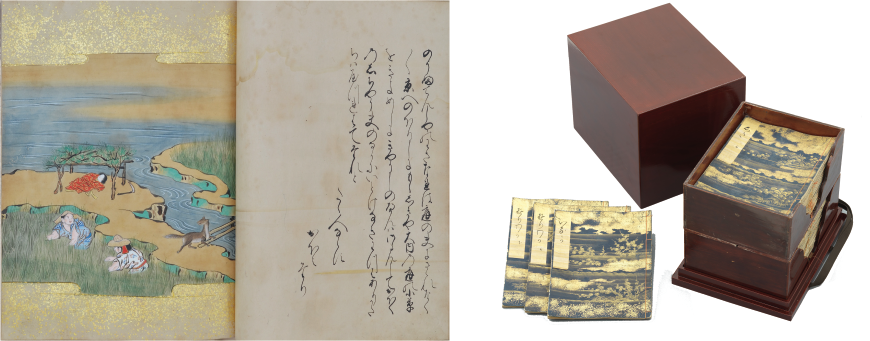
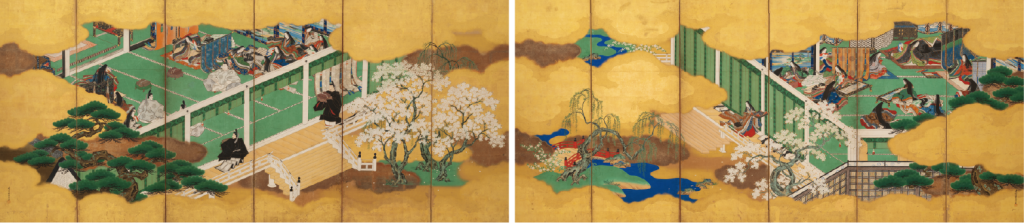
Daimyo families amassed considerable wealth during Japan’s Edo period (1603–1868), with their prized possessions including paintings, calligraphy, weapons and armor, and furnishings. They attained these objects through various means. Some were inherited from before the Edo period or were gifts from other great families, while others were newly made to order, often for inclusion in bridal trousseaus. Whatever the means, the possession of great treasures was an extremely important way for these families to display their power and authority.
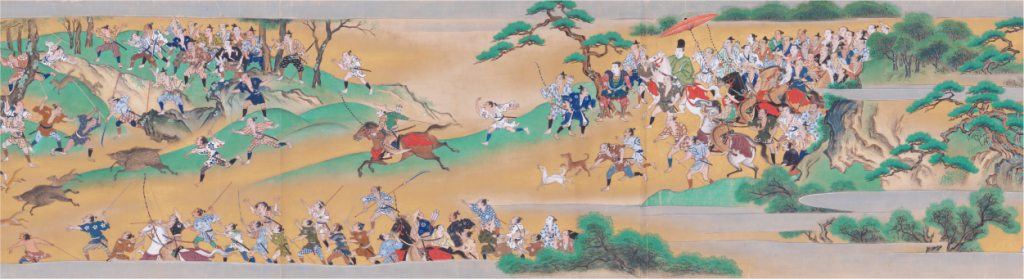
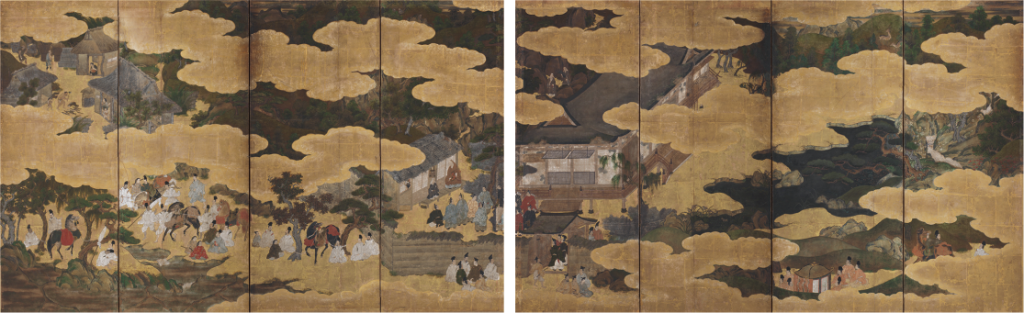
Monogatari-e were also treasured for their roles in imparting a classical education and flaunting the cultural influence of these daimyo clans. The families would hire the Edo-period’s finest painters and would spare no expense when it came to mounting or binding either. They would also commission huge multi-volume narrative picture scrolls and books, many of which are still with us today. There are lists detailing the treasures passed down through each feudal domain. There are also auction catalogues produced when many of these objects were sold following the abolition of the samurai class in the modern era. Thanks to such documents, we can tell who originally owned these precious articles located across Japan. The records suggest Umi-Mori Art Museum’s collection of monogatari-e also features works once owned and appreciated as daimyo possessions. These include Scenes from The Tale of Genji and The Tale of Muramatsu. Other works have themes that suggest they also once belonged to daimyo, such as The Cloistered Emperor’s Visit to Ohara/The Dog-Chasing Competition. We hope you also enjoy viewing these masterpieces once cherished and enjoyed by lords and ladies from times past.
Chapter 2
Pictorial Portrayals of Noble Love
Pictorial Portrayals of Noble Love
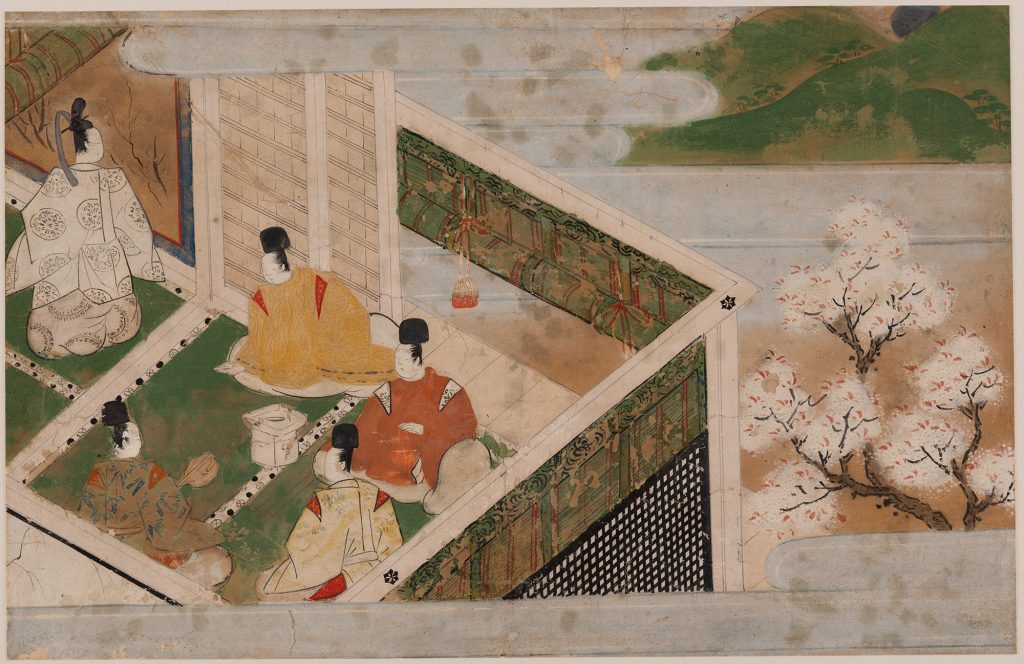
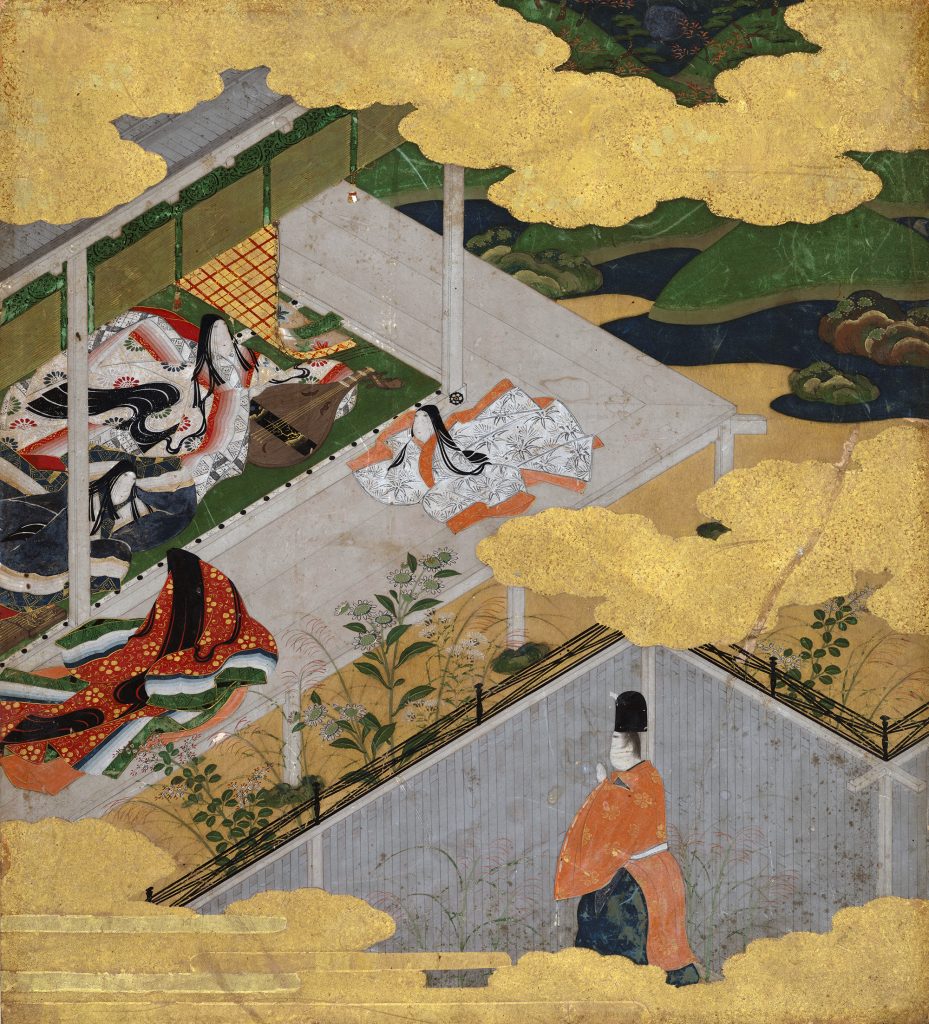
From the early Heian period (794–1192), the Japanese began to write and read stories in the native kana script. This chapter features The Tales of Ise and The Tale of Genji, two beloved works of classical literature that have inspired and provided the subjects for many painted works down the ages.
The Tales of Ise recounts the life of its protagonist “the man” over 125 short vignettes. It begins with his coming of age and ends with his death. Along the way, it details his loves, friendships, his heartbroken wanderings and his merrymaking, for example. Written over the 9th and 10th centuries, it is one of the finest examples of an “uta monogatari,” a type of story based around waka poetry. “The man” is said to be modeled on Ariwara no Narihira, a famed poet and a noble renowned for his many love affairs. Indeed, the tale features several of Narihara’s waka poems from Collection of Japanese Poems Ancient and Modern, for instance.
The Tale of Genji is a novel penned by Murasaki Shikibu at the start of the 11th century. Over its 54 chapters, it chronicles the life of Hikaru Genji and the exploits of his descendants after his death. Each chapter is given an elegant title, from The Paulownia Pavilion at the beginning to The Floating Bridge of Dreams at the end. Together, they detail the numerous relationships around Genji and the complex sentiments aroused by the loves and lives of the protagonists. Waka poetry plays a key role here too, with around 800 poems scattered through this epic tale.
It seems pictorialized versions appeared soon after the two tales were completed. These are known respectively as “Ise-e” and “Genji-e,” with this chapter exploring the diverse ways these were depicted across picture albums, illustrated handscrolls and folding screens during the Edo period.
Chapter 3
Monogatari-e and Japan’s Traditional Performing Arts
Monogatari-e and Japan’s Traditional Performing Arts
One unique feature of our museum’s monogatari-e collection is the inclusion of numerous illustrated texts for medieval Japanese performing arts like noh, ko-joruri and kowaka dance. As well as watching the actual performances on stage, people back then enjoyed reading the texts of these performances too, with illustrated versions also popular, as several extant examples reveal.
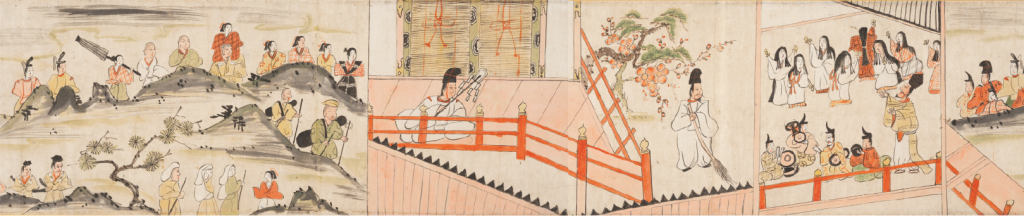
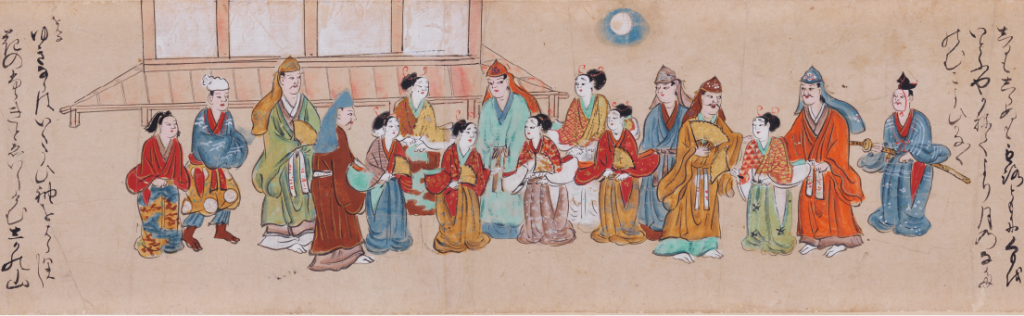
Pictorialized depictions of noh plays feature in Matsukaze and Murasame and Miidera Temple. These depict the stories themselves, unlike later Edo-period noh picture scrolls, which tended to show scenes from the noh stage. The width of both handscrolls is narrower than usual. This format is called “koe” (“small pictures”) and it was quite fashionable during the Muromachi period (1392–1573), with the unsophisticated charm of the illustrations also typical of that period.
The Tale of Muramatsu is an illustrated version of the joruri play “Muramatsu.” We can learn about ko-joruri stories from the works of the artist Iwasa Matabei. The Tale of Muramatsu counts among a series of magnificent ko-joruri picture scrolls illustrated in the style of Matabei, and we know it once belonged to the Tsuyama Matsudaira clan.
Kowaka dance is a narrative performing art that stood shoulder to shoulder in popularity with noh theater from Japan’s Warring States period to the start of the Edo period. It was particularly adored by samurai, with many dances themed around the exploits of this warrior class, such as tales from the Genpei War and the Revenge of the Soga Brothers. The “Atsumori” dance performed by the warlord Oda Nobunaga before the Battle of Okehazama was a kowaka standard too. Kowaka dance numbers also became a popular form of literature thanks to their captivating stories (essentially digested versions of war chronicles), with dance scenes also depicted in visual form across handscrolls, picture books and folding screens. Whether valorizing great martial deeds or lamenting the sorrows of defeat, these kowaka tales must have touched the hearts of the warrior class, with their love for the artform evident in the lavish splendor of these illustrated works.
We hope you enjoy this journey through this richly diverse fusion of painting, literature and the performing arts.

Chapter 4
Illustrated Tales of War: Slaughter and the Repose of Slain Souls
Illustrated Tales of War: Slaughter and the Repose of Slain Souls
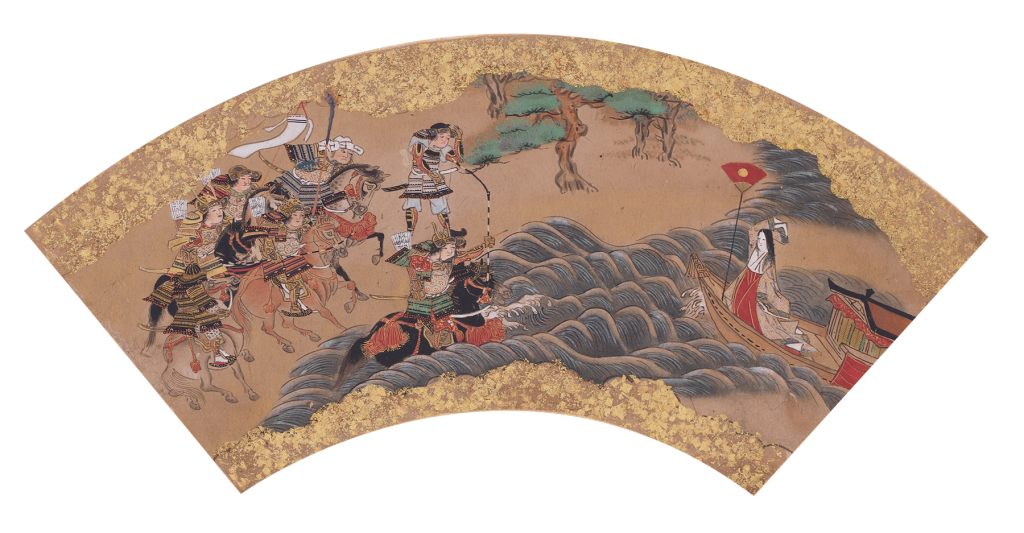
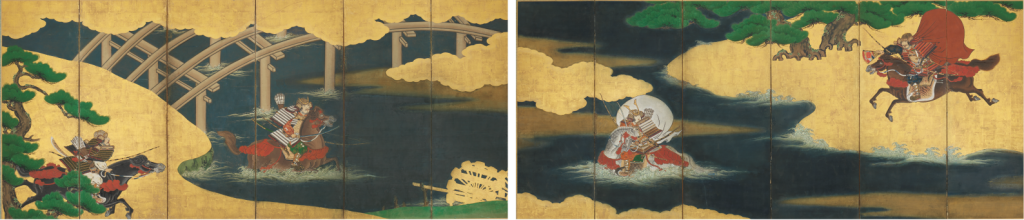
“The Jatavana Temple bells ring the passing of all things.” Thus begins The Tale of the Heike, an epic that details the turbulent times at the end of the Heian period (794–1192) through the story of the rise and fall of the Taira clan. The clan prospered when its head Taira no Kiyomori attained a high-ranking position at the imperial court, with his daughter Tokuko (Kenreimon-in) later giving birth to the future Emperor Antoku. Minamoto no Yoritomo, a rival to the Taira, subsequently tried to wrest back some power, with this leading to skirmishes across Japan. After being forced from the capital Kyoto, the Taira fled across the Seto Inland Sea before finally meeting its end at the Battle of Dan-no-ura. The tale closes with the passing of Kenreimon-in, who had retired to Ohara to pray for the repose of her clan’s souls. The Tale of the Heike became widely popularized through written materials and performances by itinerant lute-playing storytellers known as “biwa hoshi.” It was also a theme of performing arts like noh, joruri and kabuki. The general public also became familiar with the tale during the Edo period thanks to the spread of printed materials, with scenes from the story enjoyed through the medium of painting too.
The tale is often associated with the stirring, dramatic exploits of warriors at places like Ichi-no-Tani and Yashima, with many extant works depicting these battles. However, medieval works also focused on the repose of slain souls, an aspect of the tale emphasized, for example, in The Cloistered Emperor’s Visit to Ohara, a Momoyama-period work that portrays Emperor Shirakawa’s visit to Kenreimon-in, living in seclusion in Ohara.
From the Edo period onwards, samurai were expected to read The Talk of the Hieke and other stories of war to learn about the feats of the Minamoto clan, the forefathers of the warrior class, with the illustrations in these works also providing models for samurai conduct. This chapter introduces The Tale of the Heike and other war chronicles that reflect the rich diversity of Japan’s warrior culture.
Chapter 5
The Enchanting World of Miracle Tales and Otogi-Zoshi Short Stories
The Enchanting World of Miracle Tales and Otogi-Zoshi Short Stories
People have long weaved stories about strange natural phenomena or mysterious happenings beyond human comprehension.
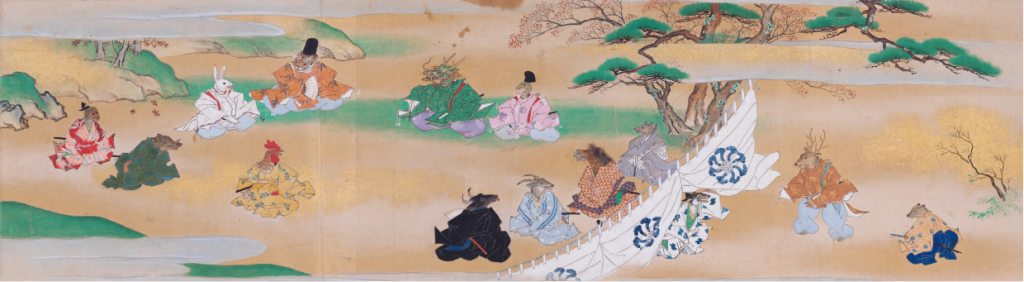
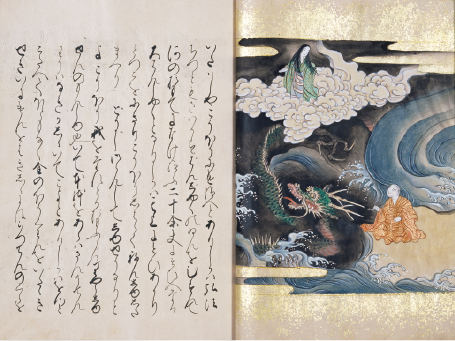
These often features gods and Buddhist deities who are still familiar to us today, such as Tenjin and Hachiman. Two such examples are The Origins of Kitano Tenjin and The Origins of Hachiman, both of which narrate the origins and miraculous deeds of gods and Buddhist deities. Engi emaki (illustrated handscrolls concerning origins) like these were offered up to temples and shrines, where they were carefully preserved to the present day. The Muromachi period saw the production of many short stories called “otogi-zoshi.” These covered a broad range of themes. Some were adapted versions of the aforementioned origin tales, such as The True Form of the God Tenjin. Some were variations on courtly stories from the Heian period (794–1192), such as The Illustrated Tale of Fuseya. Other examples include The Palace of the Tengu Goblins, which depicts the activities of Minamoto no Yoshitsune and his dealings with tengu goblins in a manner reminiscent of a war chronicle, and The Contest of the Twelve Zodiac Animals, a representative instance of a work portraying various animals behaving like humans. Some otogi-zoshi tales are in text form only, but many feature colorful illustrations, like the works introduced in this chapter. Another captivating aspect here is the rich variety of the pictures, whether it’s The Illustrated Tale of Sumiyoshi, with its simple illustrations of the type often seen in Muromachi-period picture scrolls, or The Contest of the Twelve Zodiac Animals, with its images produced by painters from the Kano school, the official painters of the Tokugawa shogunate. Another representative otogi-zoshi work is The Illustrated Tale of Bunshō the Saltmaker. It narrates how an honest man from an ordinary background managed to attain great wealth. As such, it was often read at New Year celebrations. In these works, we can sense the love people felt back then for these familiar tales. We can imagine their amazement at the mysterious events and their affinity for the heroes overcoming great hardships.